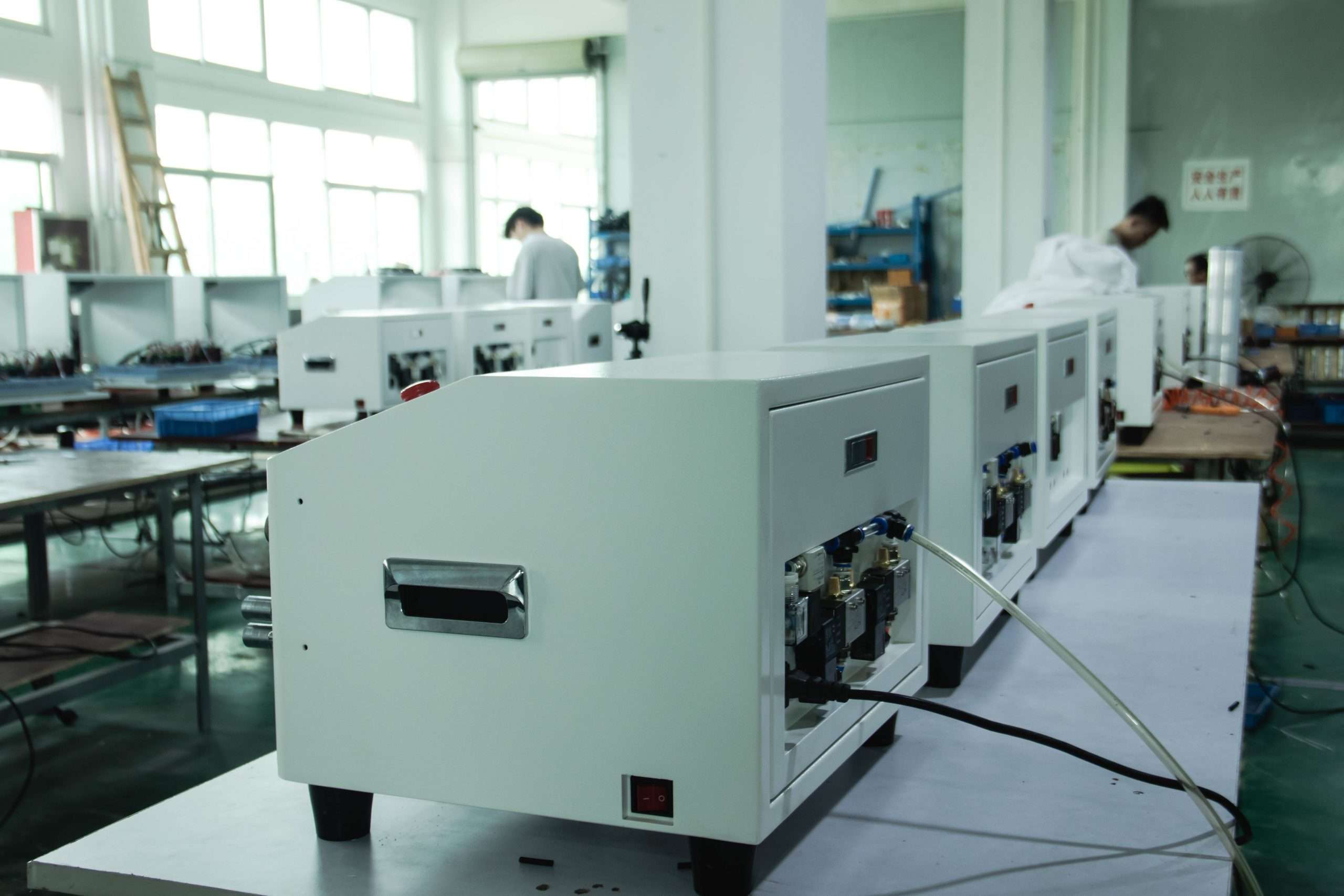
This fully integrated system is built for precision: now approved to German VDE and automotive standards, it automates wire cutting, dual-end crimping, and low-temperature tin dipping with exceptional accuracy.
Munich Factory Result: BMW Tier1 Case Study
At a Continental plant in Ingolstadt, this machine replaced three manual stations. The outcome:
38% faster cycle times
02% crimp rejection rate
3 FTE labor saved per shift
Why It Meets European Standards
VDE-compliant terminations with full RFID traceability
Cold tin dipping to automotive-grade specs
Sub-millimeter stripping, ISO 6722 Class B
Flux-free zones for IP 67-rated connectors
Key Engineering Highlights
Automotive-grade cutting/scoping:dual-stage stripping of Teflon/XLPE insulation, ±0.1 mm tolerance.
Zero-defect crimping:6 axis servos, supports Schlemmer-type terminals, 40 mm stroke.
Cold tin dipping:includes Stuttgart-tested thermal controls, nozzle adjustments for optimal results.
Case–Flux Contamination Fix (Audi Q6)
Problems like dendritic growth on harnesses were traced to:
Dip temp too high (255 °C → 245 °C per VW TL 824)
Purging time too short (2.8 s → 3.1 s)
Nozzle angle misaligned (22° → 18°)
With these adjustments—and an integrated Menzel preheater—the system meets DIN 8518 standards.
Technology Breakdown: BMW Tier1 (Continental Ingolstadt)
Before deployment, the team used oscilloscopes, thermal imaging, and force profile data. Key tune-ups included:
Stripper delay: 0.25 s → 0.18 s
Crimp dwell: 0.40 s → 0.35 s
Flux viscosity: 38 cP → 42 cP (Loctite F640)
Results: just 0.12% force deviation, passed VW 60330 humidity test.
“Send 10 samples. We deliver DIN compliant strip/crimp force diagrams and salt spray reports.” – Dr. Weber, Process Lead
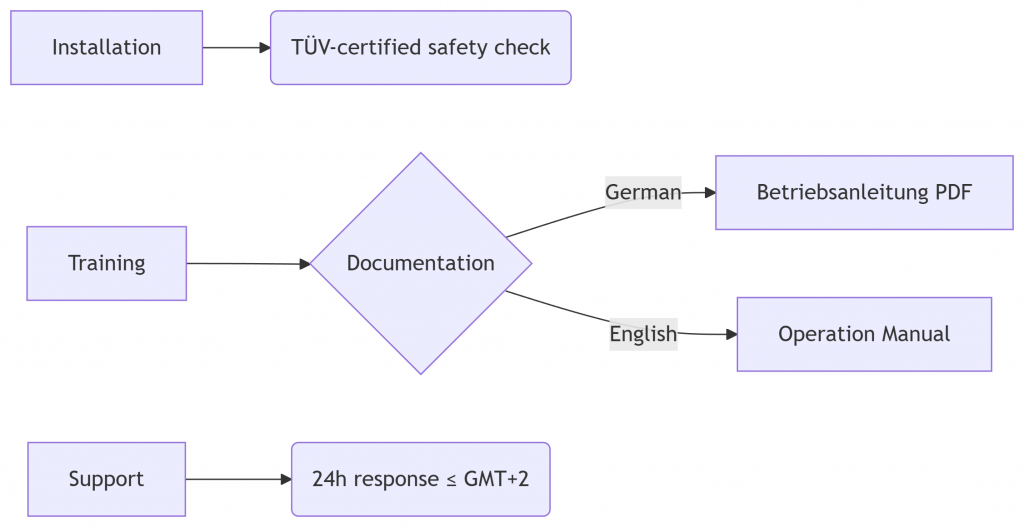
German-Grade Service & Support
Challenge
Innovation
Outcome
VDE audits
RFID process logging
100% traceability
Scratch damage
Step-depth stripping
0% micro-scratch rate
Flux crystallization
Heated delivery lines
600+ hrs uptime
Factory space limits
Compact footprint (1900×760×1500 mm)
55% smaller than typical EU footprint
Want EU Grade Automation?
Book your automated wire processing demo or request optimization settings by visiting our website: